Food Waste Reduction
SIGNIFICANCE OF FOOD WASTE
The U.S. wastes nearly 60 million tons of food each year, which equates to about 325 pounds per person annually. Food waste accounts for over 20% of landfill content, making it one of the largest components. When composted or processed anaerobically, it can be turned into soil amendments.
Here’s a breakdown of the main issues associated with food waste
Environmental Impact
- Greenhouse Gas Emissions: Decomposing food waste produces methane, a climate super-pollutant that requires expensive mitigation. If ranked as a country, food waste would be the third-largest greenhouse gas (GHG) emitter after China and the U.S.
- Resource Waste: Producing food requires water, land, energy, and labor. When food is wasted, all those resources are wasted too.
Economic Impact
- Lost Revenue: Food waste costs Americans over $218 billion each year—equivalent to 130 billion meals.
- Household Budgets: The average American family of four throws away about $1,600 worth of produce annually. That’s like tossing a month’s rent into the trash.
Social Consequences
- Food Insecurity: While billions of tons of food are wasted annually, millions of people go hungry. Reducing waste could help redirect surplus food to those in nee
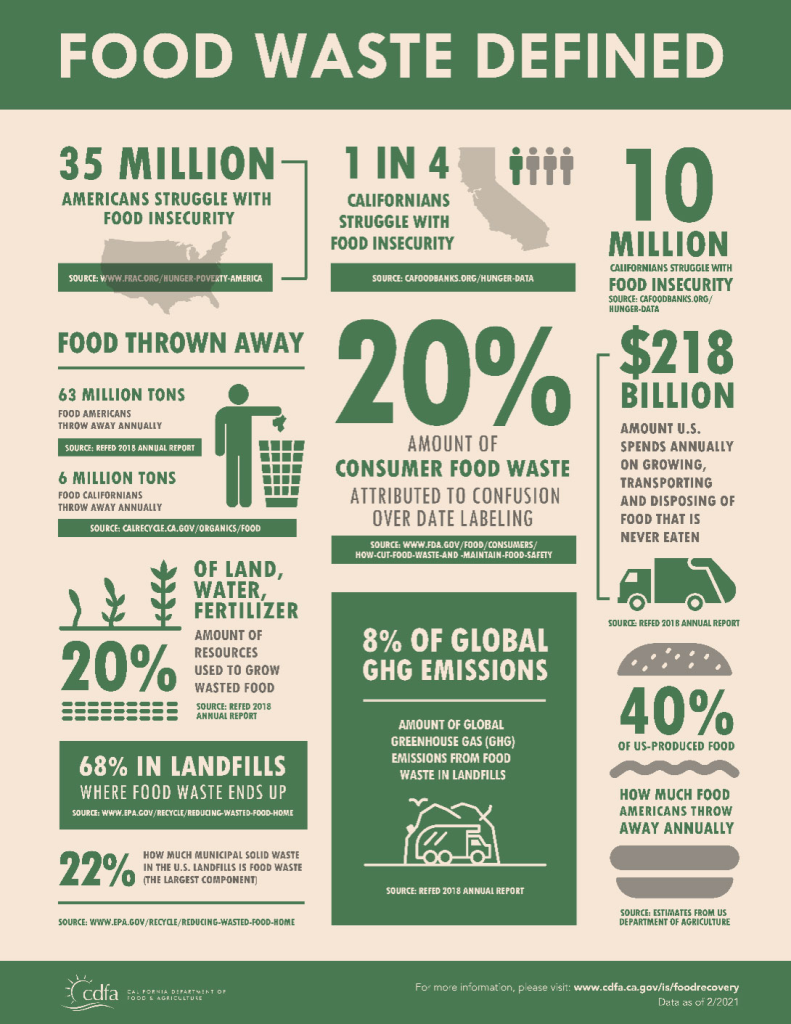
Credit: California Department of Food and Agriculture
FOOD WASTE DIVERSION AND RECOVERY IN TUCSON
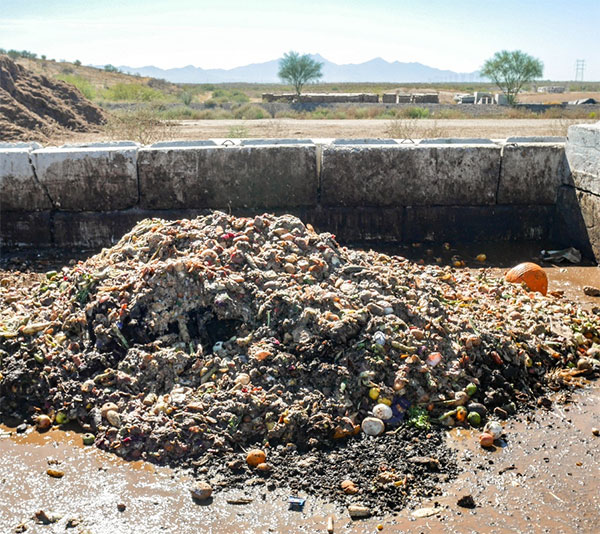
Credit: Stop Waste Tucson
Municipalities throughout the country are involved in managing food waste. In the Tucson metro area, the focus has been on collecting food scraps for composting at the Los Reales Landfill. Residents can use the Tucson Environmental Services FoodCycle and UA Compost Cats drop-off sites to deposit food scraps, while TES also provides collection service for businesses. A private firm, Desert Compostables, offers paid bi-weekly front-door pickup for homes in the area.
In addition to composting food waste, several local organizations collect surplus food donations that would otherwise be discarded. Notable examples include the Community Food Bank of Southern Arizona, Interfaith Community Services, Tucson Food Share, Casa Maria Soup Kitchen, and Iskashitaa Refugee Network. These initiatives contribute to reducing food waste, alleviating food insecurity, and fostering community cohesion.
IMPORTANCE OF FOOD WASTE REDUCTION
Food recovery and composting are critical methods to reduce food waste, but prioritizing prevention can result in further reductions in overall total waste.
Household strategies for preventing food waste include:
- Smart shopping
- Proper storage
- Meal planning
- Utilizing leftovers
Business strategies include:
Conducting waste audits
Optimizing inventory and purchasing
Reconsidering menu choices and food preparation
Educating employees
Improving supply chain coordina
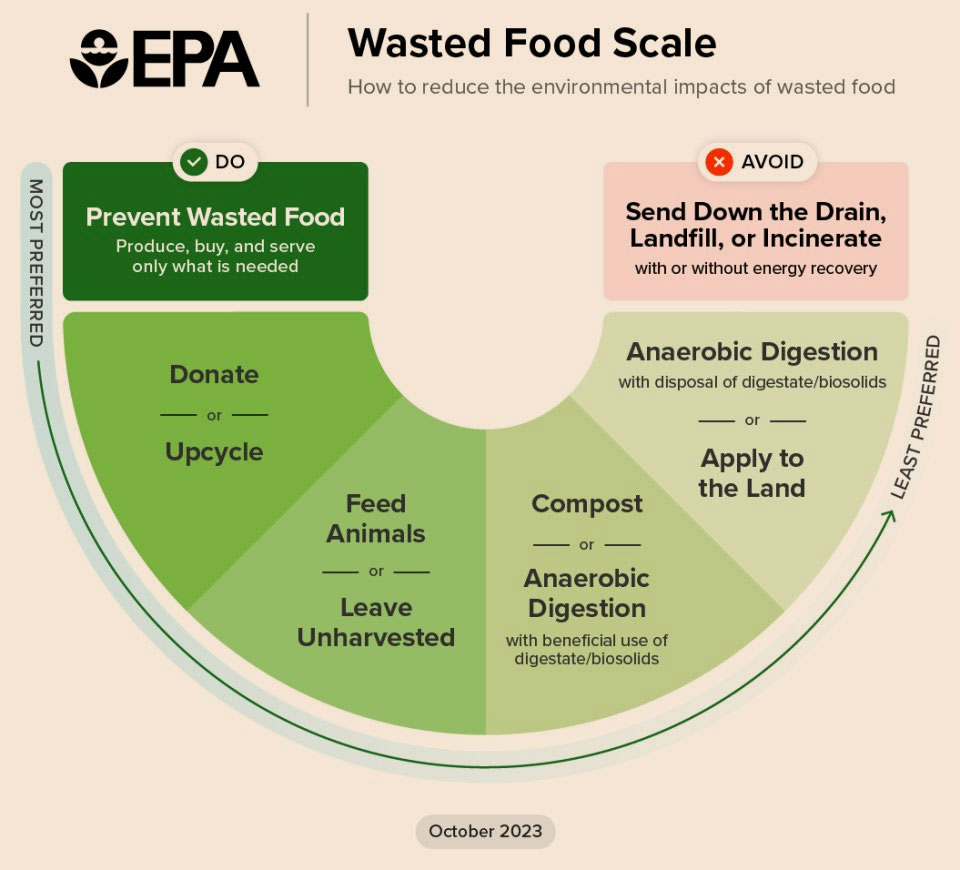
Credit: U.S. EPA
IMPROVING LOCAL FOOD WASTE REDUCTION EFFORTS
There are a number of standout programs across the country that have tackled food waste with creativity, collaboration, and measurable impact. Here are some strategies to consider for improving efforts in Tucson and neighboring areas:
Clear Goals & Local Relevance
- Estimate the baseline level of food waste within communities.
- Set short term- and long-term targets to reduce the amount of food going to waste,
- Ground food waste messaging in local culture, climate and habits—think regional produce, desert-friendly storage tips, and bilingual outreach.
Waste Audits & Data Collection
- Conduct baseline food waste assessments in homes, schools, and businesses.
- Use surveys, visual audits, and community feedback to identify key waste sources.
Behavior Change Tools
- Provide residents with meal planners, smart shopping tips, and “Eat Me First” labels.
- Apply community-based social marketing to encourage changes in habits; small changes = big impact.
Engaging & Education
- Host workshops, cooking demos, and composting tutorials.
- Use murals, posters, and social media to highlight food waste prevention.
- Highlight methane reduction and soil benefits to build buy-in.
Food Rescue & Redistribution
- Partner with food banks, shelters and mutual aid groups to identify opportunities for improving food recovery efforts.
- Create easy donation pathways for restaurants, grocers, and special events.
Composting & Scrap Diversion
- Provide training for backyard composting.
- Establish annual recruitment goals for the FoodCycle program.
- Pilot curbside collection of food waste in residential areas.
Coalition Building
- Create a local task force or advisory group to shape strategy and boost engagement on food waste issues.
Tracking & Reporting
- Share progress through dashboards, newsletters, reports, and public events.
- Acknowledge outcomes and modify food waste reduction strategies in response to community feedback.
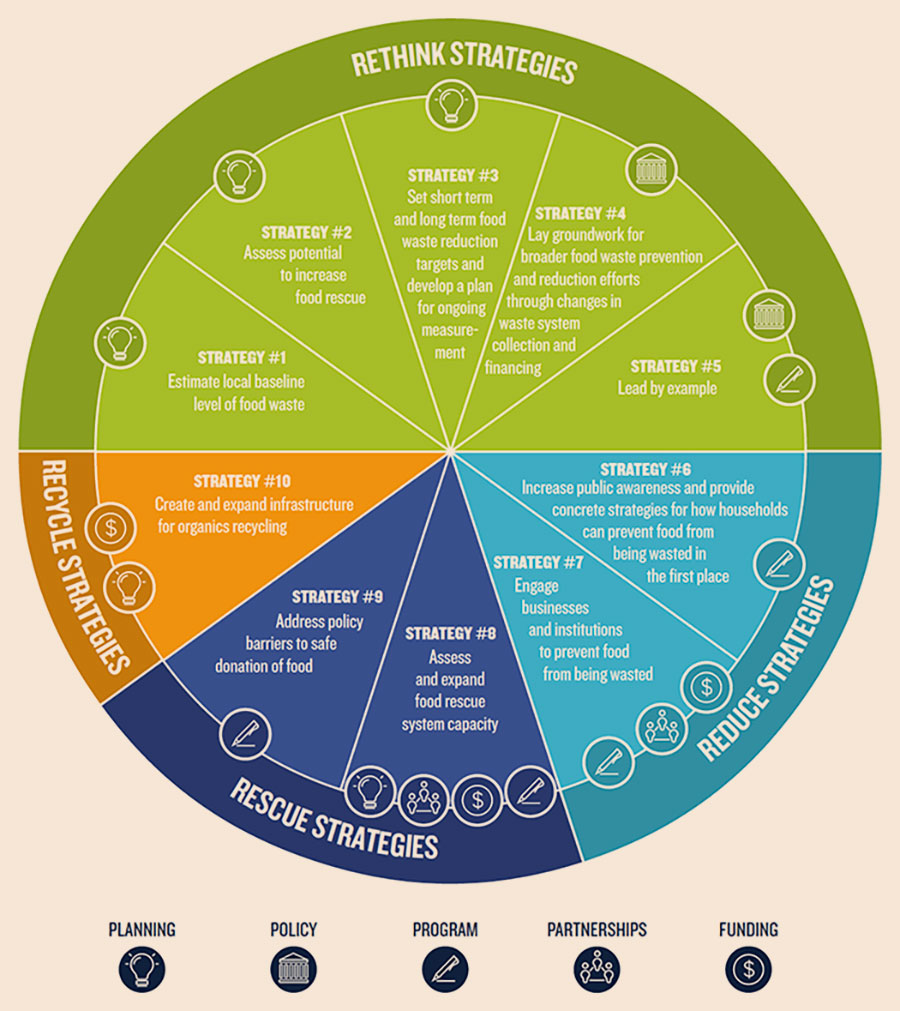
Credit: C40 Knowledge Hub & Natural Resources Defense Council