Plastic Pollution, Recycling Challenges, and Solutions
On this page:
THE PROBLEM WITH PLASTICS
- Plastics are widely used materials; however, their durability, environmental impact, reliance on fossil fuel resources, and associated health concerns have made them a subject of global concern
- More than 40% of all plastics produced annually are designated for single-use applications. That includes things like packaging, utensils, straws, and plastic bags—items designed to be used once and then discarded.
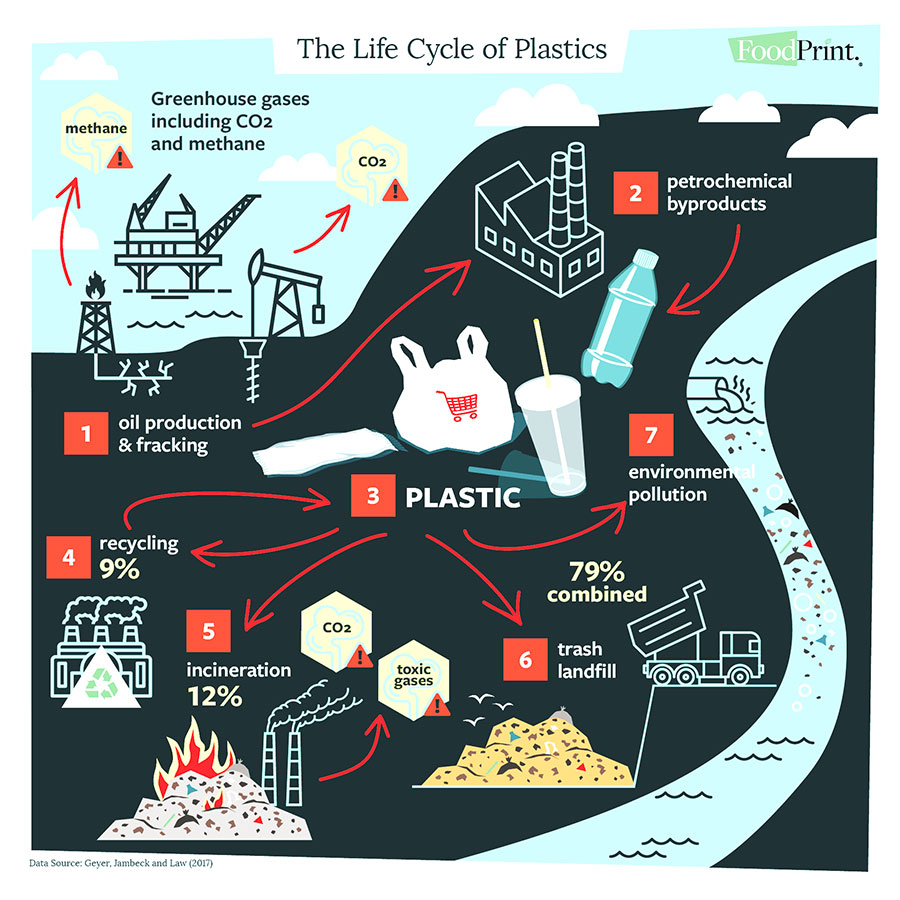
- Single-use plastics are often viewed as a waste management concern, but their entire lifecycle has implications for human health and the environment well before they are disposed of.
- Most plastics are made from petrochemicals—by-products of refining oil and processing natural gas—and the fossil fuel industry is betting its future on making more of it.
- In the U.S., much of the plastic is made from natural gas extracted by hydraulic fracturing or “fracking.” Fracking yields ethane, a key building block for plastics, and its increased supply has fueled a huge surge in petrochemicals for plastic production.
- The fracking process has a complex environmental footprint that includes water contamination, air pollution, and habitat disruption.
- Surface spills of fracking fluids and wastewater can pollute rivers and soil. Well integrity failures may allow chemicals or methane to migrate into underground aquifers.
- Methane emissions from fracking operations are a potent driver of climate change. The U.S. oil and gas industry emits more methane annually than 164 countries combined.
- In the next step of plastic production, ethane is converted into ethylene via thermal cracking or steam cracking processes. Ethylene is a key component for plastics, resins and other synthetic materials.
- The ethane cracking process consumes significant energy and causes substantial air pollution with climate and health risks.
- Ethane crackers release hazardous air pollutants like benzene, toluene, formaldehyde and 1,3-butadiene, which are linked to cancer, reproductive harm and respiratory conditions.
- Most U.S. cracker units are located near low-income communities and communities of color, especially along the Gulf Coast. These areas already face high pollution burdens, and cracker plants intensify those risks, raising equity concerns.
- Cracking ethane in high-temperature furnaces emits large amounts of carbon dioxide because of fossil fuel use and high energy needs.
- Plastic production is a major driver of climate change, and its impact stretches across every stage of the lifecycle—from the extraction of fossil fuels, the manaufacture of plastic, its use, and disposal.
- In 2019, plastic production generated 2.2 billion tons of GHGs—5.4% of global emissions—and could reach 21%–31% by 2050. These emissions are about double those from airlines and match those from 600 coal plants.
- The plastic industry produces 400+ million metric tons of plastic each year and it is expected to triple globally by 2060, as fossil fuel companies s double down on plastics and petrochemicals amid declining energy and transportation demand for their products.
- The anticipated growth of petrochemical and plastic capacity is expected to substantially increase GHG emissions, challenging efforts to keep global warming below 1.5°C.
Credit: FoodPrint
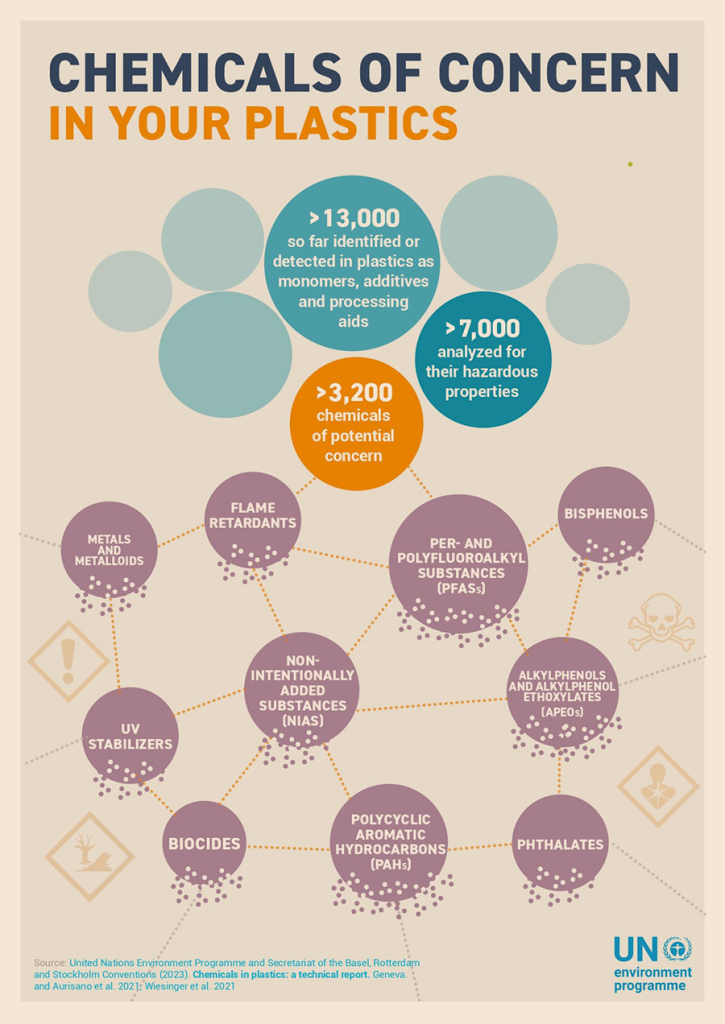
- Plastics are rarely just “one” material. There are more than 16,000 chemicals added to plastics to give them various qualities–shiny, matte, flexible, hard, heat resistant, water resistant, etc. And unfortunately, more than a quarter of these chemical additives have been identified as potential “chemicals of concern” due to risks to human health and the environment.
- Studies have detected plastic-associated chemicals in blood, lungs, breast milk, placentas and fetal tissue. These chemicals may enter the human body through ingestion, inhalation, or dermal absorption.
- Key chemicals of concern in plastics include phthalates, bisphenols, and PFAS, which may leach from plastic products and have been linked to endocrine disruption, reduced fertility, and an increased risk of chronic diseases.
Credit: United Nations Environmental Program
CHALLENGES IN PLASTIC RECYCLING
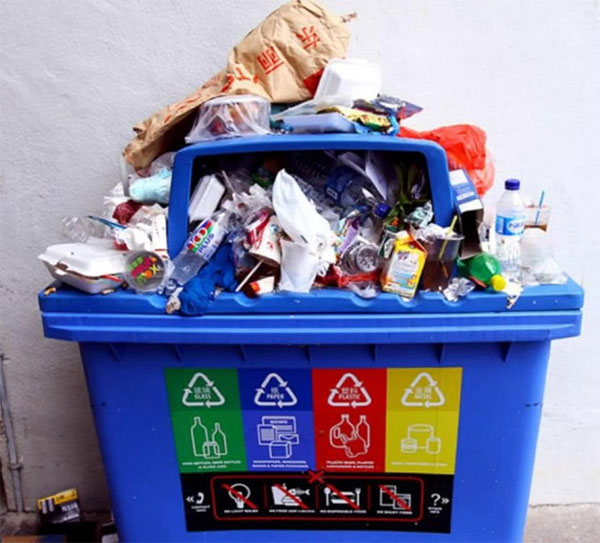
- Recycling would seem to provide an answer to the mounting plastic waste crisis. But plastic recycling has struggled for 30 years, with recycling levels never reaching more than 10% of the plastic produced annually
- There are many different kinds of plastics (PET, HDPE, LDPE, PVC, PP, PS, etc.), each with different chemical structures and melting points. Mixing them often leads to weak, low-quality recycled material, so they must be carefully sorted—an expensive and error-prone process.
- Plastics usually contain dyes, fillers, stabilizers, and other additives that complicate recycling. Food residue, labels, and other contaminants further reduce recyclability.
- Plastic production from virgin materials is often cheaper than using recycled plastic.
- Unlike metals and glass, plastic cannot be recycled many times without significant loss of properties.
- Most recycled plastics are not reintroduced into the manufacturing process to make similar products. Instead, collected materials are often downcycled into lower quality products. For example, PET bottles often become carpet fibers, lumber or textiles rather than new bottles.
Source: University of Colorado Boulder Environmental Center
LOCAL INITIATIVES: HEFTY RENEW PLASTIC WASTE COLLECTION
- Hefty ReNew is a collaborative initiative among Tucson Environmental Services, Ward 6 Office, Dow Chemical, and Reynolds Consumer Products. A network of designated drop-off locations has been established to collect so-called hard-to-recycle plastics—such as chip bags, foam containers, and plastic utensils—in specially marked orange bags. The collected materials are then sent to specialized facilities for:
- Repurposing into plastic blocks, lumber, and other construction materials.
- Conversion into fuels or feedstocks via so-called chemical recycling (e.g. high heat processes like pyrolysis or gasification).
- Combustion in cement kilns as coal replacement to create energy.
- Hefty ReNew focuses on diverting plastic waste from disposal, but does not address the root issue of society’s dependence on fossil fuels and overproduction of plastics. Specifically, the program:
- Creates the illusion that the plastic problem is being managed, encouraging consumers to feel better about throwaway systems and single-use habits.
- Enables petrochemical companies and consumer brands to justify more single-use plastic and delay systemic strategies that would eliminate waste, not just manage it.
- Processes plastic waste for applications that are less environmentally preferred, such as being burned in cement kilns or used in an energy recovery process. Burning or co-processing plastic waste generates substantial GHG emissions and local pollution.
BYFUSION PLASTIC BUILDING BLOCKS
- A portion of the plastic waste collected in Tucson (primarily flexible and film plastics) will be sent to the ByFusion facility at the Los Reales Landfill, where it will be processed into building blocks for retaining walls, fencing, sheds, benches, and small structures.
- Turning plastic waste into building blocks may appear innovative, but it does not address the underlying issues of our linear “take-make-use-waste” economy. This process doesn’t eliminate waste; it merely relocates it while distracting from the higher priority goal of reducing fossil fuel extraction and plastic production at the source.
- Repurposing discarded plastic diverts material from the landfill, but it is only a temporary fix compared to real and lasting systemic change—such as cutting unnecessary plastic use, redesigning packaging and encouraging reuse and refill systems.
-
Plastic blocks or bricks don’t return material to the production cycle to make the same or similar products. It is a form of downcycling that locks post-consumer plastics into a lower‑value, non‑circular application. That means demand for single-use plastic made from virgin materials stays high, reinforcing ongoing fossil fuel extraction and continuous plastic production.
-
Plastic does not become environmentally inert when it becomes a building block. Long-term degradation, microplastic release and chemical additives should be considered when evaluating the environmental performance of plastic construction materials. Many plastics contain hazardous chemicals (e.g., BPA, phthalates, flame retardants, and heavy metals). Embedding them in construction doesn’t neutralize the risk—they may leach into soil over decades. Real, long-term testing is lacking.
- Plastic building materials can melt or drip during fires, and release toxic smoke—particularly when made from materials like polyethylene, polypropylene, polystyrene, or PVC. These risks complicate firefighting and reduce safe escape times.
-
There is also reason to question whether plastic building blocks will be recycled when they reach the end of their useful lives. Years or decades from now, blocks removed during demolition or renovation may be weathered, damaged, contaminated with dirt or other construction materials, or difficult and costly to separate and transport. Unless there is a demonstrated collection system and a producer commitment to take back and reprocess used blocks, claims that the material can be recycled again remain largely theoretical. The more realistic end-of-life possibilities may include landfilling or incineration.
- According to the ByFusion developer, plastic construction blocks are believed to have a smaller carbon footprint compared to concrete blocks.
-
This comparison is based on a lifecycle assessment that omits the most carbon-intensive stages of plastic’s life cycle: oil and gas extraction, refining, petrochemical processing, and polymerzation. These upstream processes generate substantial GHG emissions. Excluding them gives the plastic feedstock for the blocks an accounting advantage and presents an incomplete picture of the their overall carbon footprint.
- The plastic building blocks rely on a steady stream of plastic waste–and therefore carry the full climate impact of the virgin materials from which they originated. According to the Center for International Environmental Law, producing ethylene—the raw material for many plastics—generated 184.3 to 213 million metric tons of CO₂-equivalent emissions globally in 2015, roughly equal to the annual emissions of 45 million cars. Repurposing plastic waste does not erase these emissions; it simply relocates the material into another product form. Any system dependent on plastic waste inherently depends on continued fossil fuel extraction.
-
Additionally, replacing concrete blocks with plastic blocks should not be framed as a meaningful climate benefit, because it simply swaps one carbon‑intensive material for another. The plastic and concrete industries are both major drivers of global warming, and each must adopt genuinely cleaner production methods that deliver real, measurable reductions in GHG emissions.
- None of this means waste diversion is unimportant. Reducing landfill use matters. But waste management is not the same as climate mitigation. A product can address a disposal problem while still carrying a large, hidden carbon footprint.
-
RECOMMENDED ACTIONS FOR LOCAL OFFICIALS
- No matter how “green” Hefty ReNew and ByFusion appear on the surface, these methods should be viewed as stopgap measures—ones that may provide short-term utility but ultimately delay the urgent transition toward circular models for material use and recovery.
-
It’s time to reconsider our relationship with plastic. Addressing plastic pollution requires not only managing waste, but also confronting the material’s deep ties to the fossil fuel economy and its role in driving climate change.
-
To protect both the environment and human health, local officials are encouraged to prioritize source reduction, reuse and refill systems, and true recycling methods over end-of-life management approaches like turning plastic waste into building blocks.
- The central question should be not simply “Can we find another use for this plastic?” but “How do we prevent so much waste plastic in the first place?”
- Recommended Actions:
- Run a public awareness campaign: Educate residents about the environmental impact of plastic and promote reusables and refillable best practices (e.g., build a “zero waste kit” with stainless-steel bottles, reusable straws, cloth napkins, reusable shopping bags, travel mugs, and tiffin food carriers).
- Support reuse systems: Partner with food service providers to scale up the use of reusable containers for beverages, take-out, and leftovers. Offer small grants for businesses to invest in durable service ware, dishwashers, reusable take-out containers, and other in-house reuse solutions.
- Partner with local entrepreneurs: Support refill shops, repair cafes, and circular economy startups through grants or incubator programs.
- Encourage business participation: Work with local business associations and community groups to launch a “Skip the Stuff” campaign that encourages restaurants to only provide foodware accessories (e.g., straws, napkins, plastic utensils, and condiment packages) upon consumer request.
- Collaborate with schools: Integrate zero-waste education into curriculums and student projects.
- Set procurement policies: Use City purchasing power to reduce single-use plastics and encourage reusable alternatives in public facilities and events.
- Support state and federal policy changes: Advocate for systems where product manufacturers follow zero waste principles, ensuring products and packaging are designed to reduce lifecycle pollution and waste.
- Avoid high heat waste treatment systems: Do not send waste to facilities (e.g., combustion, pyrolysis, or gasifiction) that process discarded plastic and other materials into energy or fuel.
RESOURCES
- From Fracking Well to Landfill: Tracing Plastic’s Toxic Lifecycle
- Plastic & Health: The Hidden Costs of a Plastic Planet
- Ethane Cracker Plants: What Are They?
- Plastic-production emissions could triple to one-fifth of Earth’s carbon budget – report
- The Deep Injustice of Plastic Pollution
- Chemicals in Plastics – A Technical Report
- Toxic Plastic Chemicals Number in the Thousands, Most Are Unregulated, Report Finds
- Plastics ‘crisis’ is costing $1.5 trillion in global deaths and injuries, report says
- Plastic “Recycling” is a False Solution to Plastic Pollution