
Chemical Recycling: Issues and Risks
“Chemical recycling” (sometimes referred to as “advanced recycling” by its industry proponents) is an umbrella term that refers to a set of technologies that use heat, pressure or chemicals to turn plastic waste into fuels, chemicals or raw materials for new plastic.
Chemical recycling methods for processing plastic waste are developing technologies and currently have limited operational facilities. These processes have different names like pyrolysis, gasification, solvolysis, or other technical terms. However, what they all have in common is that they often struggle with technical challenges, poor economic viability, weak circularity, pollution concerns, and regulatory loopholes.
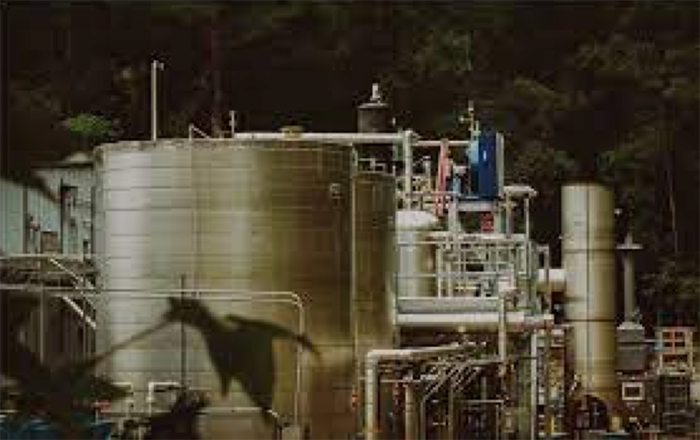
Credit: Beyond Plastics
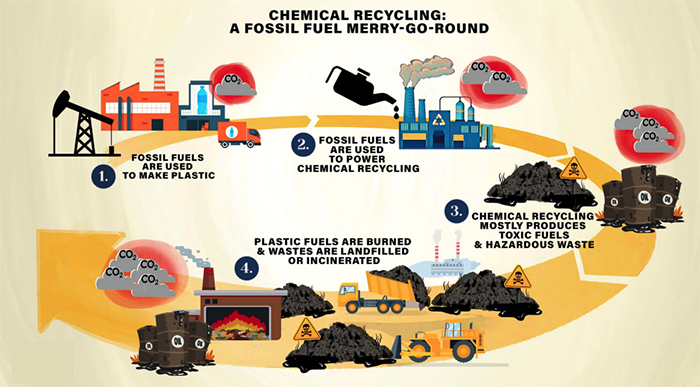
Here is a breakdown of the issues:
Environmental & Health Risks
- Energy Demand: Chemical recycling requires substantial energy, often involving high temperatures and considerable energy input, which is frequently supplied by burning fossil fuels. This can lead to a high carbon footprint.
- Environmental Releases: Pyrolysis (the most common method of chemical recycling) and related processes can emit harmful substances like benzene, dioxins, and polycyclic aromatic hydrocarbons. These pollutants have been linked to cancer, respiratory conditions, and reproductive issues, especially with long-term or residential exposure.
- Byproducts and Residuals: Facilities also generate a mix of hazardous and non-hazardous waste streams, which may include heavy metals and persistent organic pollutants. These waste streams include char and tar residues, spent solvents and unconverted plastic waste.
- Pollution Hotspots: Facilities are often sited in vulnerable communities where cumulative pollution burdens are already high, raising equity issues.
Technical & Economic Challenges
- Unreliable Performance: Multiple U.S. chemical recycling facilities have closed, faced delays, or declared bankruptcy due to technical and financial challenges. Scaling up these operations remains a significant challenge.
- Limited Feedstock Compatibility: Pyrolysis facilities struggle to process mixed, post-consumer waste with varied polymers, additives, dyes, and contaminants, making it difficult to efficiently break down plastic waste into reusable material.
- High Capital Needs: Facilities require significant capital investment and must manage operating expenses alongside changes in feedstock quality, high energy costs and market prices for virgin material.
- Transparency Issues: The public, regulators, and even parts of the industry know very little about what’s really happening inside these facilities. Companies may publish aggregated or selective data, making it difficult to verify their claimed benefits.
Climate and Circularity Concerns
- Not True Recycling: Pyrolysis facilities produce a highly complex, variable hydrocarbon mixture, requring extensive refining and is not equivalent to recycled plastic feedstock. The majority of pyrolysis outputs are burned as fuel.
- Greenhouse Gases: When pyrolysis oil is converted into fuel, the carbon stored in the plastic is released into the atmosphere.
- Greenwashing Concerns: Chemical recycling is used by industry to delay real solutions to the plastic crisis like curbing unnecessary packaging and scaling up reuse and refill systems.
- Regulatory Loopholes: Trade associations from the oil, chemical, and plastics sectors are lobbying U.S. EPA and states to reclassify chemical recycling plants as “manufacturing” instead of “solid waste combustion,” so they can avoid stricter emission controls and regulatory oversight.
Credit: Beyond Plastics and International Pollutants Elimination Network