Choose to Refuse, Not Waste: Why It’s Time to Skip the Stuff
Many takeout meals come with a pile of extras most people never asked for: plastic forks, napkins, condiment packets, straws, and stirrers. These items are often used for only a few minutes before being tossed in the trash. Across Tucson and communities nationwide, this unnecessary waste adds up quickly — creating litter and increasing landfill waste.
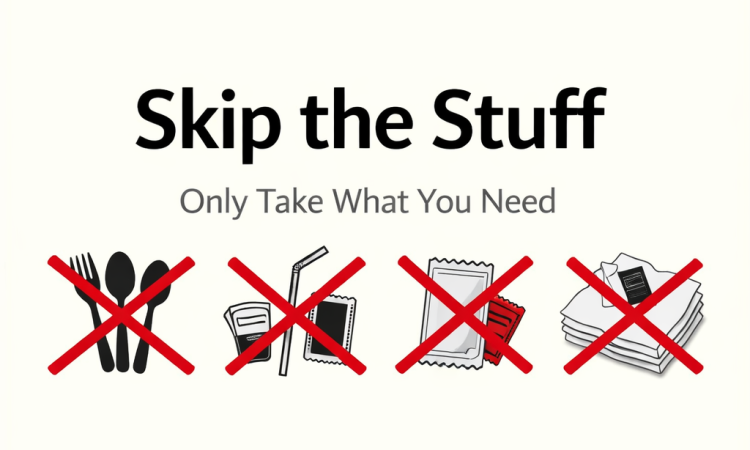
That is why more communities, restaurants, and residents are embracing the “Skip the Stuff” movement. The idea is simple: only provide disposable accessories when customers actually request them. Many people eating at home already have reusable utensils and napkins available. By skipping unneeded extras, we can reduce waste at the source before it ever needs to be landfilled or incinerated.
Single-use foodware is typically made from plastic, paper, or mixed materials that require energy, water, trees, fossil fuels, and chemicals to produce and transport. Even paper items carry environmental impacts through logging, manufacturing, and shipping. Reducing unnecessary disposable items conserves resources and helps lower greenhouse gas emissions associated with producing throwaway products.
Residents can help make a difference by specifying “no utensils needed” when ordering takeout or delivery, carrying reusable utensils and cups when possible, and supporting restaurants that prioritize waste reduction. Restaurants can participate by making disposable accessories available only upon request, training staff on waste reduction practices, and encouraging customers to opt out of extras.
“Skip the Stuff” is not about making life less convenient. It is about eliminating waste that serves no real purpose. Small actions taken consistently by thousands of people can prevent tons of unnecessary waste each year.
Tucson can become a leader in waste prevention and sustainability by promoting simple, practical solutions like this one. After all, the most effective way to reduce waste is to prevent it from being created in the first place.
