How to Build a Zero-Waste Kit You’ll Actually Use
A zero-waste kit is more than a bag of “eco-friendly stuff.” It’s a simple, intentional system that helps you avoid single-use plastics on the go. The best kits are lightweight, modular, and built around your real habits.
Here’s a practical guide to building one that works in real life.
🌱 What a Zero‑Waste Kit Actually Does
It replaces the most common single‑use plastics you encounter when you’re out and about:
- Disposable cups
- Plastic utensils
- Napkins
- Food containers
- Plastic bags
- Bottled water
- Snack wrappers
Your kit should make it easy to say “No thanks, I brought my own.”
🎒 Step 1: Choose Your Container
Pick something you already own — a small pouch, a tote, or a backpack pocket. The goal is grab‑and‑go.
Tips:
- Soft pouches keep things compact.
- Waterproof bags help if you carry food containers.
- If it’s bulky, you won’t use it — keep it simple.
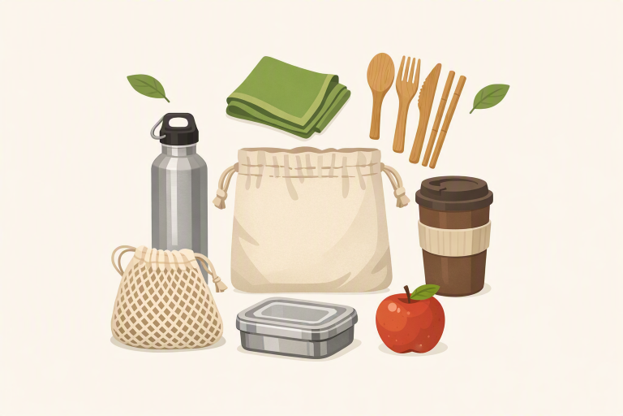
🥤 Step 2: Add Your Reusables (The Core Kit)
1. Reusable Water Bottle
This replaces dozens of plastic bottles every month. Choose one you like enough to carry daily.
2. Travel Mug or Collapsible Cup
Perfect for coffee shops, tea, or even restaurant leftovers.
3. Utensils
A small set of metal or bamboo utensils prevents plastic forks from entering your life.
4. Cloth Napkin
Doubles as a placemat, hand towel, or emergency wrap for snacks.
5. Food Container
A lightweight, leak-proof stainless steel or silicone container lets you take leftovers without restaurant disposables.
6. Reusable Bags
A canvas tote or cotton bag handles groceries, takeout, or unexpected errands. A muslin or mesh bag handles bulky items like produce or bread.
🍎 Step 3: Build Your “Snack Defense”
Most impulse snacks come wrapped in plastic. Your kit can prevent that.
- A small jar or tin for bulk snacks
- A reusable sandwich bag like beeswax wraps
- A fruit or two (nature’s original zero‑waste packaging)
🧼 Step 4: Add Personal‑Care Swaps (Optional)
If you want to go deeper, include:
- A small bar of soap in a tin
- A refillable hand sanitizer
- A travel toothbrush and toothpaste tabs
- A tiny cloth for wiping surfaces
These help you avoid hotel minis, plastic‑wrapped wipes, and disposable toiletries.
🧩 Step 5: Customize Your System
Your kit should reflect your habits. Ask yourself:
- Do you buy coffee often? Add a mug.
- Do you eat out frequently? Add a container for leftovers.
- Do you shop at farmers markets? Add produce bags.
- Do you travel? Add a cutlery set and collapsible cup.
A zero‑waste kit is personal — not prescriptive.
🔄 Step 6: Make It Easy to Maintain
A kit only works if you keep it stocked.
- Wash items when you get home.
- Restock snacks weekly.
- Keep the kit in the same spot so you never forget it.
- If something feels annoying to carry, replace it with a lighter version.
🌍 Why This Matters
Every reusable item you carry prevents dozens — sometimes hundreds — of single‑use plastics from entering landfills, incinerators, or waterways. Small habits scale into big impact when practiced daily.
A zero‑waste kit isn’t about perfection. It’s about being prepared so you can make low‑waste choices without effort.
