Back-to-School, Less Waste: Simple Tips for a Greener School Year
As a new school year begins, families are shopping for supplies, packing lunches, and preparing for busy schedules. It’s also the perfect time to reduce waste, save money, and cut down on the growing amount of plastic that ends up in landfills and the environment.
Going back to school doesn’t have to mean buying a cart full of disposable products. A few thoughtful choices can significantly reduce waste throughout the school year while helping students develop lifelong habits that benefit both people and the planet.
1. Use What You Already Have
Before heading to the store, take inventory of last year’s supplies. Many backpacks, binders, folders, calculators, rulers, and art supplies still have plenty of life left. Reusing school supplies saves money and avoids the environmental impacts of manufacturing new products.
2. Choose Durable School Supplies
When something does need replacing, look for products built to last. Refillable pens and mechanical pencils, sturdy metal scissors, quality binders, and reusable notebooks can often be used for several years, reducing waste over time.
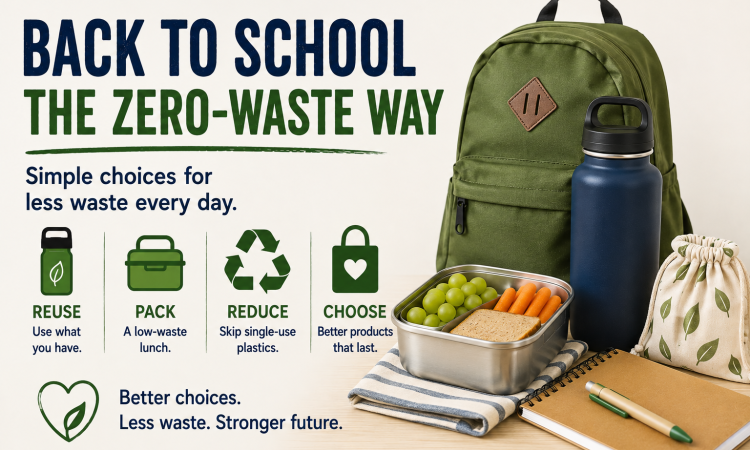
3. Pack a Waste-Free Lunch
Single-use lunch items create a surprising amount of trash over an entire school year. Instead, pack lunches in reusable containers and include:
- A reusable water bottle
- Reusable food containers
- Cloth napkins
- Reusable utensils
- Refillable snack containers
4. Skip Single-Use Plastic Bags
Instead of disposable sandwich bags, use reusable food storage containers or washable silicone or fabric snack bags. These alternatives can replace hundreds of disposable bags each year.
5. Buy in Bulk When Possible
Buy in bulk to reduce unnecessary packaging. See if your local market, co-op, or health food store has a bulk section and bring your own washable, reusable bags to fill up on fresh fruits, vegetables, nuts, dried fruit, and more.
6. Choose Better Materials
Whenever practical, select products made from recycled materials, paper, wood, metal, or other durable materials instead of single-use plastics. Recycled-content notebooks, folders, and paper products help support recycling markets while reducing demand for virgin materials.
7. Label and Care for Supplies
Writing names on lunch containers, water bottles, jackets, and backpacks helps keep them from ending up in lost-and-found bins or being replaced unnecessarily. Taking care of school supplies extends their useful life and reduces waste.
8. Reduce Food Waste
Pack realistic portions that students will actually eat. Uneaten food often ends up in the trash, wasting not only the food itself but also the water, energy, and resources used to produce it.
9. Make Waste Reduction a Family Habit
Back-to-school season offers a great opportunity to talk with children about making thoughtful choices. Simple habits—bringing a reusable water bottle, refusing unnecessary plastic utensils, repairing supplies, and recycling correctly—can become lifelong practices.
Small Changes Add Up
No family will eliminate all waste, and perfection isn’t the goal. The goal is making better choices whenever possible. One reusable lunch container may replace hundreds of disposable bags. One refillable water bottle can eliminate hundreds of single-use plastic bottles. One repaired backpack can stay out of the landfill for another year.
When thousands of families make these small changes together, the environmental benefits add up. Less plastic is produced, fewer natural resources are consumed, and less waste ends up in our local landfill.
This school year, make sustainability part of your family’s routine. By choosing reusable products, reducing plastic, preventing food waste, and reusing what you already own, you can help build a healthier future—one school day at a time.
