Give Thanks, Not Waste: A Zero-Waste Thanksgiving
Thanksgiving is a time to celebrate family, friends, and good food. But along with the holiday festivities comes something less welcome: a surprising amount of food waste, disposable packaging, and single-use products.
This Thanksgiving, why not start a new tradition? Celebrate the holiday while reducing waste and protecting the environment. A few simple changes can make your gathering more sustainable without sacrificing the food, fun, or traditions that make Thanksgiving special.
Plan Ahead to Prevent Food Waste
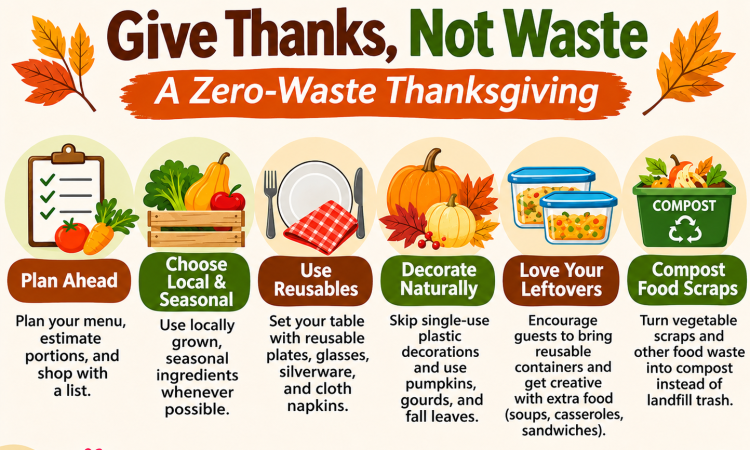
One of the easiest ways to reduce Thanksgiving waste is to avoid preparing more food than your guests can eat. Before heading to the grocery store, plan your menu, estimate portions, and make a shopping list.
Consider how many guests will attend and how much food you actually need. While Thanksgiving leftovers are part of the tradition, preparing excessive amounts of food can lead to unnecessary waste.
Whenever possible, choose locally grown, seasonal ingredients. Shopping at farmers markets can support local growers while reducing some of the packaging associated with grocery store purchases. And don’t forget your reusable shopping bags!
Set a Table Without Disposables
Thanksgiving dinner deserves more than disposable plates, plastic utensils, and paper napkins.
Use reusable dishes, glasses, silverware, and cloth napkins instead. Not only does this reduce waste, but it also creates a more welcoming holiday table.
When decorating, skip single-use plastic decorations. Pumpkins, gourds, autumn leaves, and other natural materials can make beautiful centerpieces without generating unnecessary trash.
The best Thanksgiving decorations don’t need to come wrapped in plastic.
Love Your Leftovers
Thanksgiving leftovers can be just as enjoyable as the holiday meal itself.
Encourage guests to bring reusable containers so everyone can take home their favorite dishes. Store leftovers promptly and safely, and get creative with extra food.
Leftover turkey can become sandwiches, soups, or casseroles. Extra vegetables can be added to soups or stir-fries, while leftover bread can become croutons or stuffing for another meal.
By making good use of leftovers, you can stretch your food budget while keeping perfectly good food out of the trash.
Compost What You Can’t Eat
Even with careful planning, some food scraps are unavoidable. Vegetable peelings, fruit scraps, coffee grounds, and other compostable materials can be turned into valuable compost rather than buried in a landfill.
This matters because food waste in landfills generates methane, a powerful greenhouse gas that contributes to climate change.
Composting helps return nutrients to the soil while reducing the amount of organic material sent to landfills. If you don’t compost at home, consider local food-scrap collection programs, such as Desert Compostables or the City of Tucson’s FoodCycle program.
Remember that preventing food waste in the first place is even better than composting it.
Make Waste Reduction a Holiday Tradition
A zero-waste Thanksgiving doesn’t require perfection. It simply means making thoughtful choices that prevent unnecessary waste.
Every reusable plate, carefully planned meal, saved leftover, and composted food scrap makes a difference.
More importantly, Thanksgiving offers an opportunity to rethink our everyday habits. The same practices that reduce holiday waste—buying only what we need, avoiding disposable products, reusing materials, and composting—can help us reduce waste throughout the year.
